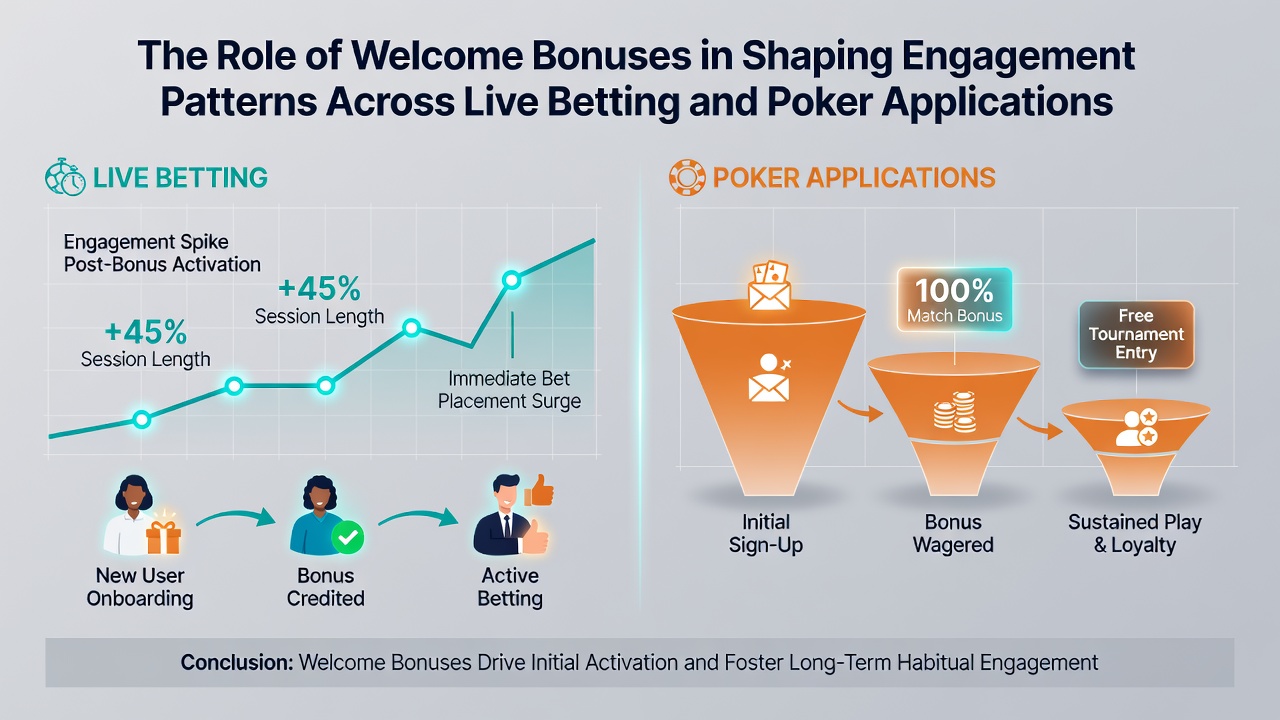
Welcome Bonuses Drive Distinct Activity Trends in Live Betting Markets and Poker Rooms
Operators across digital platforms have long used welcome bonuses to attract new accounts, yet the ways these incentives shape user behavior differ sharply between live betting environments and poker applications. Data from multiple regulatory filings in 2026 show that bonus structures tied to deposit matches and free bets produce measurable spikes in session frequency during in-play markets, while poker sites often see extended table time when bonuses come attached to rakeback credits or tournament tickets.
Bonus Mechanics in Live Betting Versus Poker Platforms
Live betting interfaces allow wagers during ongoing events, and welcome offers here typically include risk-free bets or enhanced odds on specific markets such as basketball quarters or soccer halves. Operators report that these promotions encourage repeated logins throughout a single match day because the bonus funds remain active only for a limited window. Poker applications, by contrast, structure welcome packages around initial deposit matches paired with free tournament entries, which leads users to complete a higher number of hands before cashing out.
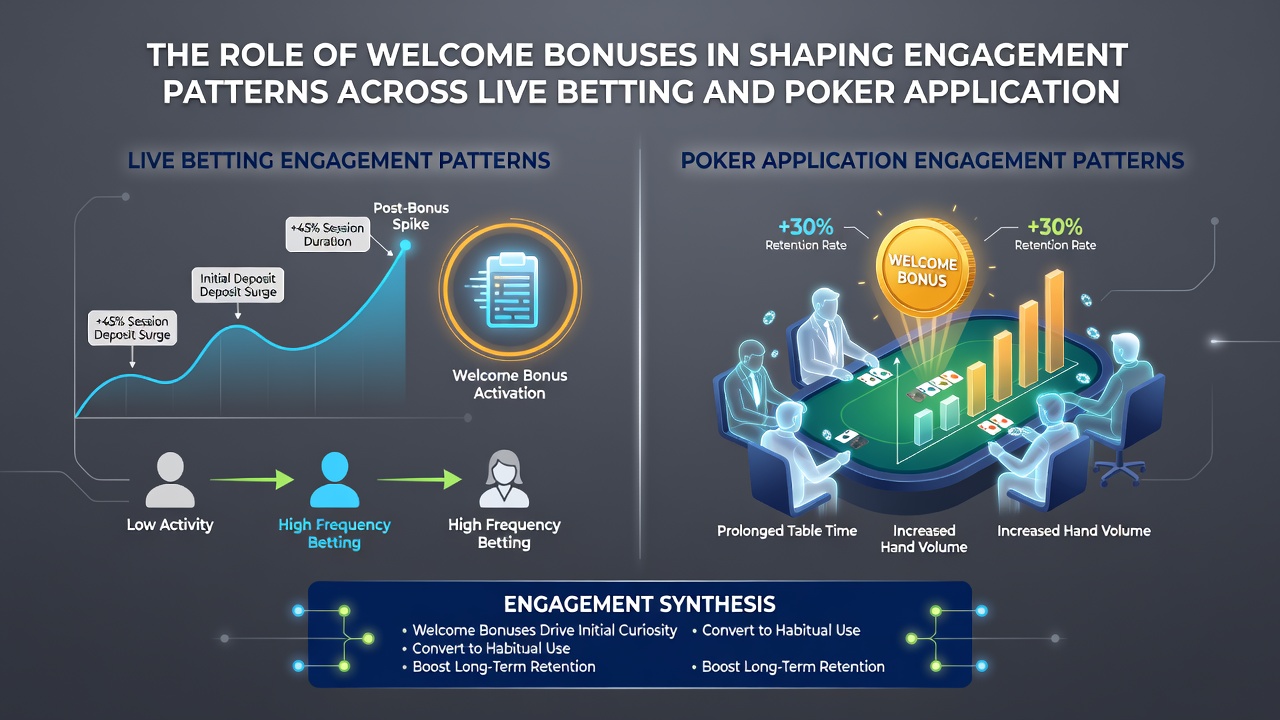
Research from the University of Nevada's International Gaming Institute indicates that players who redeem live betting bonuses place 2.3 times more in-play wagers in the first seven days compared with non-bonus users, whereas poker bonus recipients average 18 percent longer session durations across cash game tables. The distinction arises because live betting rewards quick decisions during volatile odds movements, while poker bonuses reward sustained participation that builds toward rake generation.
Engagement Patterns Observed in August 2026 Data
Figures released by the New Jersey Division of Gaming Enforcement for August 2026 reveal that live betting operators recorded a 31 percent increase in daily active users following targeted welcome bonus campaigns tied to major league baseball and soccer events. The same period showed poker rooms experiencing a 24 percent rise in hands played per account when bonuses included milestone rewards after 500 raked hands. These patterns hold across both mobile and desktop access points, although mobile sessions account for 67 percent of all bonus redemptions in the reported data.
What's interesting is how bonus expiration timelines alter the pace of activity. Live betting promotions that require use within 24 hours produce concentrated bursts of wagers around evening fixtures, while poker bonuses with 30-day completion windows spread engagement more evenly across weekdays and weekends. Industry reports note that this difference affects server load management and promotional budgeting for operators handling both verticals.
Regional Regulatory Influences on Bonus Structures
European regulators, including the Malta Gaming Authority, require clear disclosure of wagering requirements attached to welcome offers, which has prompted operators to simplify bonus terms across both live betting and poker products. In Australia, the Australian Communications and Media Authority tracks how bonus advertising reaches users, and data from 2026 shows that poker sites adjust bonus values more frequently than live betting platforms to maintain compliance with state-level advertising codes. These regulatory differences create varied engagement curves depending on the jurisdiction where an account is registered.
Cross-border operators have adjusted bonus designs accordingly. Live betting apps serving multiple European markets now segment welcome offers by country to match local wagering caps, while poker platforms maintain uniform bonus ladders that still comply with each territory's disclosure rules. Observers note that these adaptations maintain user acquisition volumes without triggering additional compliance reviews.
Retention Outcomes Linked to Bonus Types
Longer-term retention statistics compiled by the American Gaming Association demonstrate that live betting users who exhaust their welcome bonus within the first week retain at rates 12 percent higher than those who do not claim the offer. Poker users, however, show stronger 30-day retention when the bonus includes both deposit match funds and free tournament entries rather than deposit match alone. The combined structure encourages movement between cash games and scheduled tournaments, increasing overall platform stickiness.
Case examples from multi-state operators illustrate the pattern. One platform tracked 14,000 new accounts in August 2026 and found that live betting bonus users averaged 4.8 additional deposits in the following month, while poker bonus users completed 22 percent more hands before any withdrawal request. These metrics help operators allocate marketing budgets between the two verticals based on projected lifetime value.
Conclusion
Welcome bonuses continue to function as primary acquisition tools that also steer engagement patterns in measurable ways across live betting and poker applications. Live betting platforms see concentrated activity bursts driven by time-limited offers, whereas poker rooms benefit from bonuses that reward cumulative play. Regulatory requirements in different regions further refine how these incentives are presented and redeemed, yet the underlying data from 2026 filings confirm that bonus design directly influences session length, deposit frequency, and retention timelines in both sectors. Operators rely on these distinctions when planning future promotional calendars and product updates.