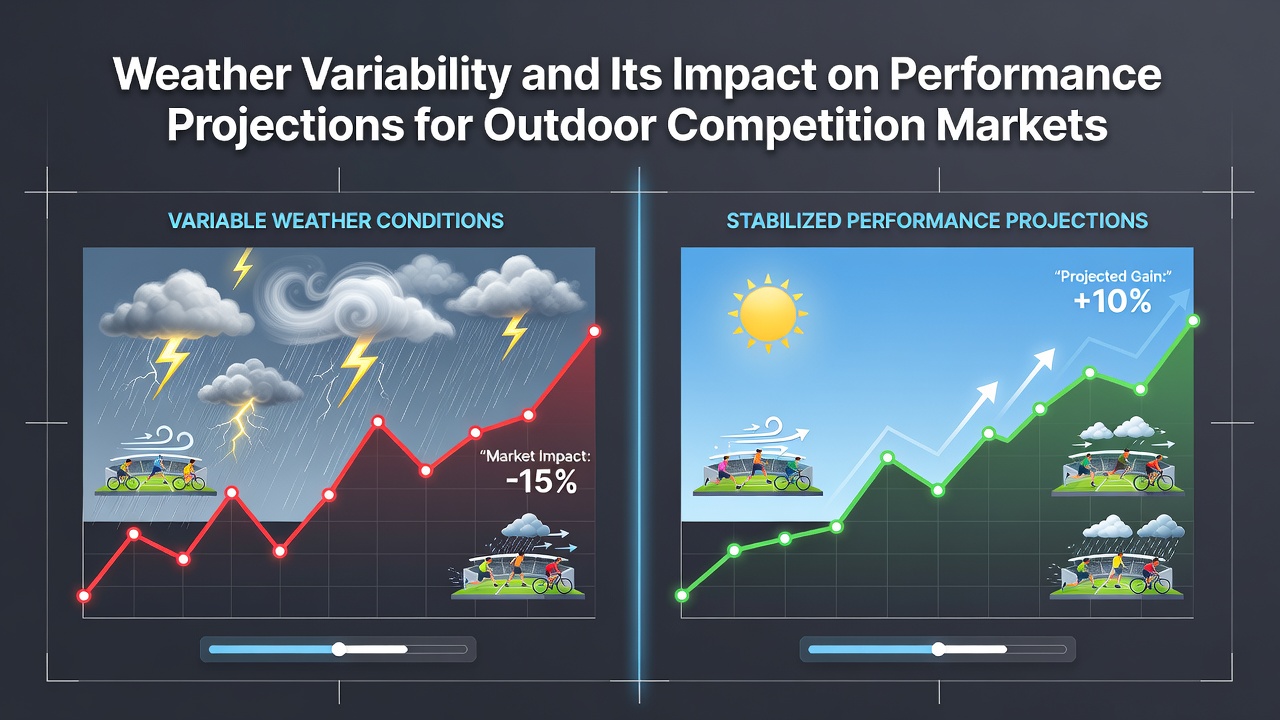
Weather Variability and Its Impact on Performance Projections for Outdoor Competition Markets
Weather variability introduces measurable shifts in athlete output across outdoor sports and these changes ripple through performance models used by analysts and market operators alike. Temperature swings, wind patterns, precipitation levels, and humidity all alter physiological responses, equipment behavior, and tactical decisions in ways that historical averages often fail to capture. Observers note that events scheduled during transitional seasons or in regions prone to rapid climate shifts show wider spreads between projected and actual results.
Temperature Effects on Endurance and Precision Sports
Heat stress accelerates fatigue rates in distance events while cold conditions reduce muscle elasticity and joint mobility. Studies tracking marathon finish times across multiple climate zones reveal that performances slow by roughly 0.5 to 1.5 percent for every degree Celsius above an athlete's optimal range. Researchers analyzing tennis matches at tournaments held in July 2026 documented serve speed reductions of up to 3 percent when court surface temperatures exceeded 38 degrees Celsius. These deviations force projection models to incorporate real-time environmental inputs rather than relying solely on past match statistics.
Golf presents another clear case where temperature influences clubhead speed and ball flight. Data collected from professional tours indicates that carry distance drops approximately 1.2 meters for every 5-degree Celsius decline below standard testing conditions. Market operators adjust totals and player-specific lines accordingly once forecasts stabilize in teh days before competition.
Wind and Precipitation as Disruptive Variables
Wind speed and direction create inconsistent playing surfaces in sports such as soccer, baseball, and beach volleyball. Crosswinds above 25 kilometers per hour have been shown to increase error rates on long passes and fly balls by measurable margins. Precipitation adds further complexity by changing ball grip, footing, and visibility. One study of European football leagues found that matches played in steady rain produced 12 percent fewer completed passes in the final third compared with dry conditions.
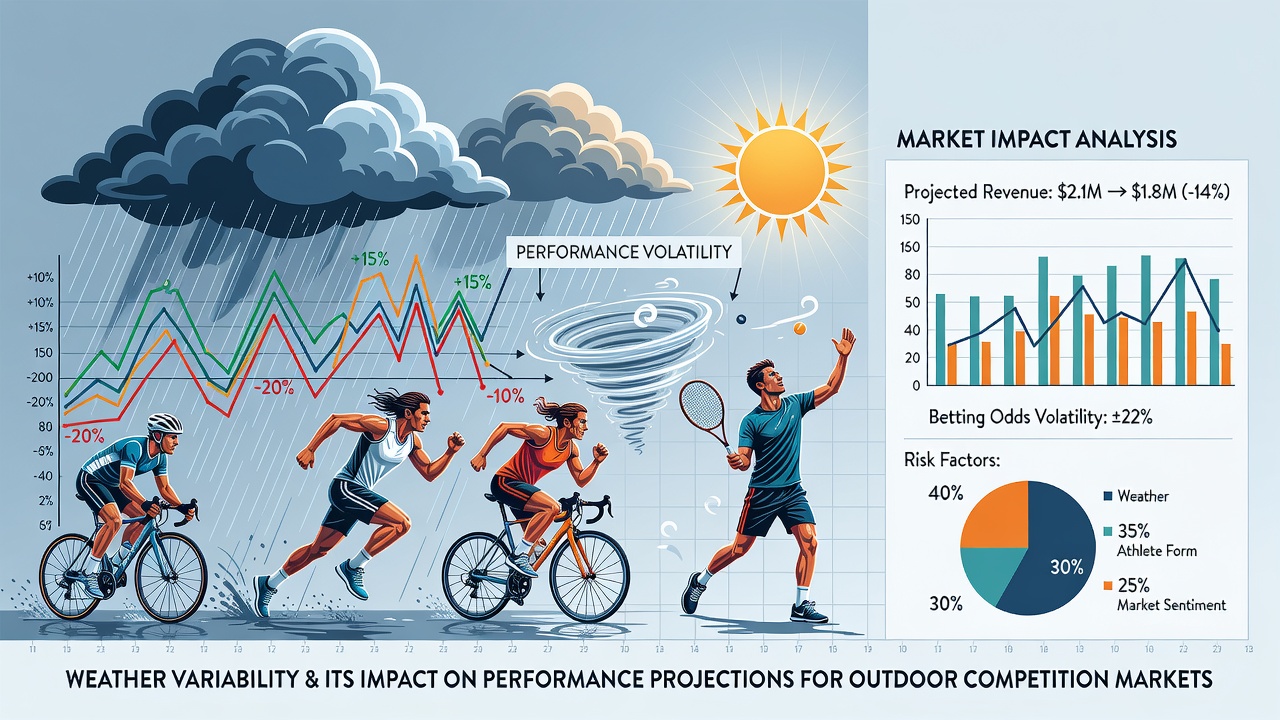
These environmental factors compound when they occur together. A sudden temperature drop accompanied by gusty winds and light rain can shift expected scoring outputs more dramatically than any single variable acting alone. Analysts therefore integrate layered forecast data into projection algorithms to narrow confidence intervals around event totals and individual player metrics.
Regional Climate Patterns and Seasonal Adjustments
Markets covering events in variable climates such as the American Midwest or coastal Australia require seasonal recalibration of baseline models. According to records maintained by the National Oceanic and Atmospheric Administration, temperature variance in these zones during summer months has increased over the past decade, producing more frequent departures from long-term norms. Similar patterns appear in Southern Hemisphere data sets covering cricket and rugby competitions where afternoon thunderstorms frequently interrupt play and alter recovery windows.
Performance databases now incorporate localized weather histories that extend beyond simple averages. Researchers compare current event conditions against multi-year distributions for specific venues, enabling more precise adjustments to projected outcomes. This approach reduces systematic bias that arises when models treat all outdoor venues as equivalent regardless of geographic exposure.
Integration of Real-Time Data into Market Projections
Advanced monitoring systems feed live weather inputs directly into statistical frameworks used for performance forecasting. Wind sensors positioned around stadiums, combined with radar precipitation estimates, allow continuous model updates as conditions evolve. Those who manage outdoor competition markets apply these revisions to adjust implied probabilities for totals, spreads, and player props in response to verified environmental shifts.
Academic reviews of endurance events demonstrate that incorporating granular weather variables improves prediction accuracy by 8 to 15 percent compared with models that rely on historical averages alone. The same principle extends to precision sports where small changes in atmospheric pressure and humidity measurably affect trajectory calculations.
Conclusion
Weather variability continues to shape performance projections for outdoor competition markets through its direct influence on physiology, equipment dynamics, and tactical execution. Data from multiple sports and regions shows consistent patterns where temperature, wind, and precipitation produce measurable departures from baseline expectations. Market frameworks that embed real-time environmental inputs alongside traditional statistics generate narrower error margins and more responsive adjustments. Continued refinement of these integrated models remains essential as climate patterns exhibit greater short-term fluctuations across key competition venues.