Regional Tax Variations Impacting Payout Processing in Digital Table Game Platforms
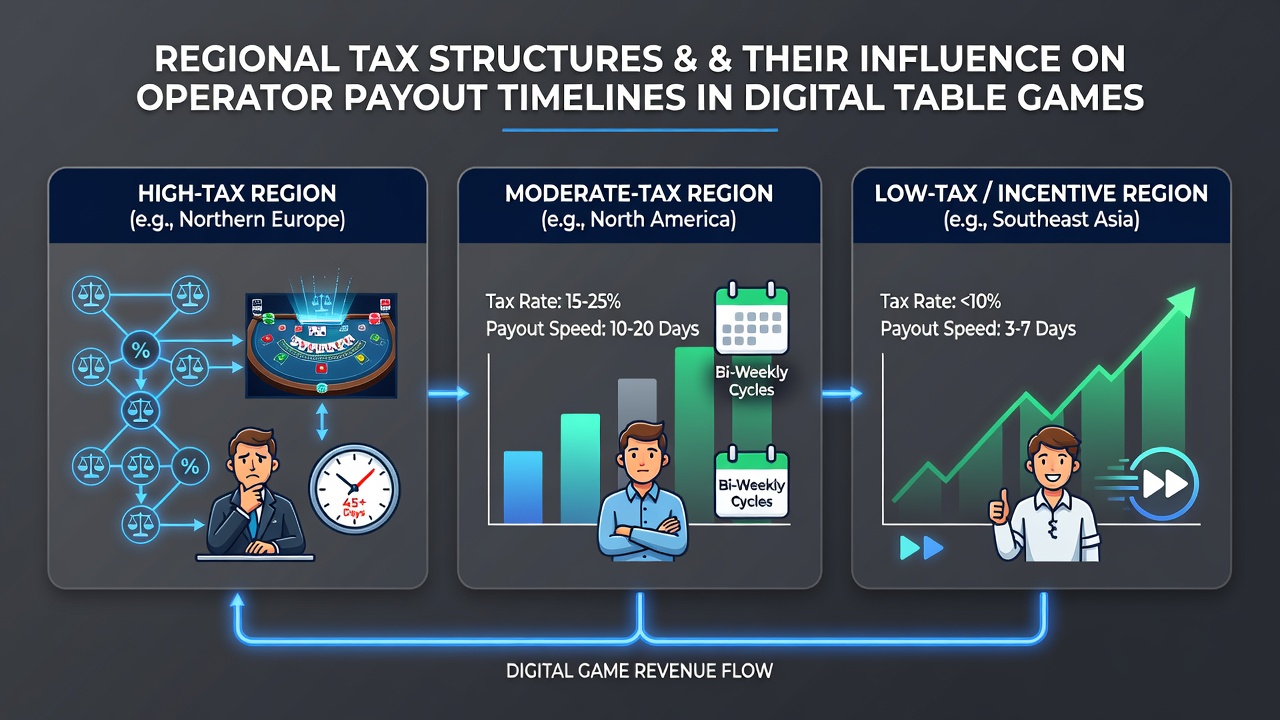
Digital table games such as blackjack, roulette, and baccarat operate under tax frameworks that differ sharply by jurisdiction, and those differences directly shape how quickly operators release winnings to players. Tax rates, collection schedules, and reserve requirements create cash flow pressures that operators pass along in the form of processing delays or accelerated verification steps. Data from multiple regulatory bodies shows that jurisdictions imposing higher effective tax burdens tend to see longer average payout windows, especially when operators must set aside funds for quarterly or monthly remittances.
Tax Rate Structures Across Key Markets
Operators in North American states calculate tax liabilities on gross gaming revenue while European and Asian markets often apply taxes on turnover or net win with additional layers of VAT or GST. In New Jersey, for instance, online casino taxes reached 15 percent of internet gaming revenue by mid-2026, requiring operators to maintain higher liquidity buffers that slow manual payout approvals. Australian states apply point-of-consumption taxes that range between 10 and 15 percent, and those levies are settled monthly, prompting platforms to batch player withdrawals until after tax calculations clear. Canadian provinces such as Ontario collect 20 percent of gross revenue from iGaming operators under the Alcohol and Gaming Commission framework, which ties directly to weekly reporting cycles that influence when funds become available for distribution.
Cash Flow Mechanics and Reserve Obligations
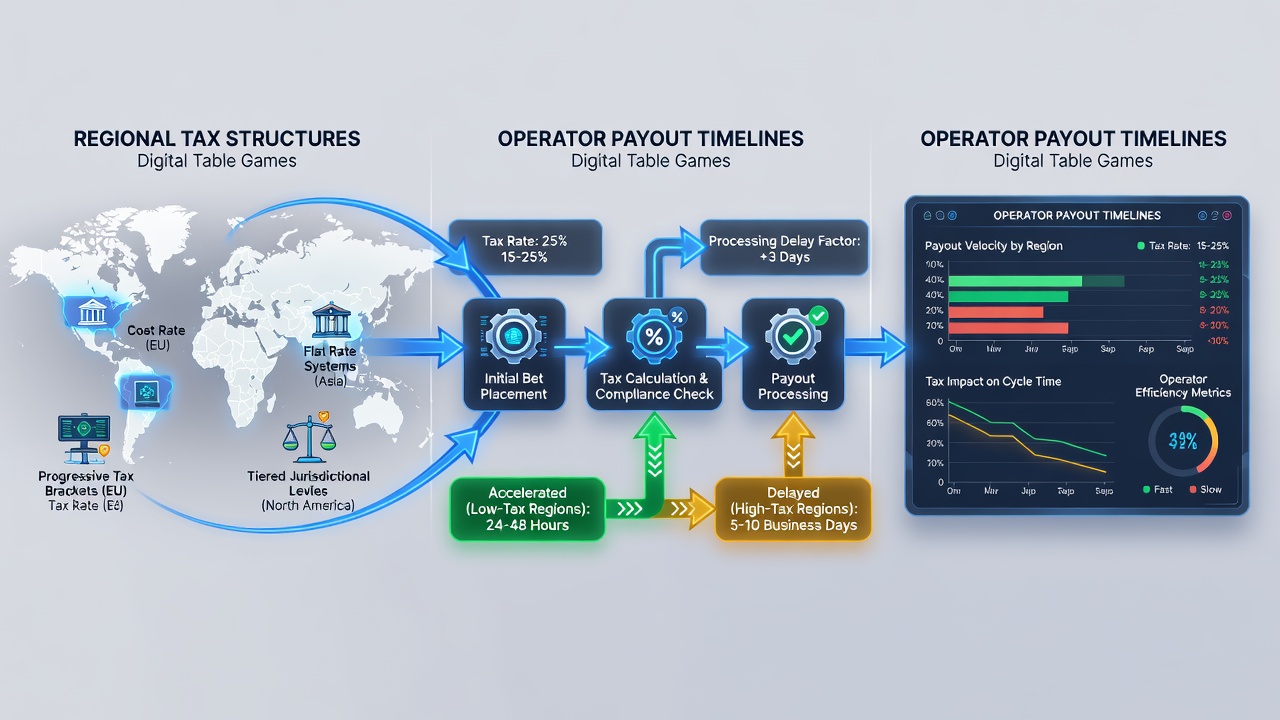
Regional rules frequently mandate that operators hold a percentage of player balances in segregated accounts or meet minimum capital thresholds before processing large withdrawals. When tax payments fall due at the end of a reporting period, operators reduce outgoing transfers to avoid shortfalls, extending timelines from the standard 24-48 hours to five business days or more. Research from the University of Nevada Reno gaming studies program indicates that operators facing quarterly tax settlements in multiple jurisdictions simultaneously experience the most pronounced spikes in payout queues during the final weeks of each quarter. Those patterns became especially visible after several U.S. states synchronized their digital gaming tax calendars in August 2026 to align with fiscal year-end reporting.
Verification Layers Triggered by Tax Compliance
High-value withdrawals often trigger enhanced due diligence when tax authorities require source-of-funds documentation to prevent money laundering. In markets where operators remit taxes on a per-transaction basis, such as certain Canadian provinces, automated systems flag withdrawals above threshold amounts for manual review, adding 48 to 72 hours before funds release. European operators licensed under the Malta Gaming Authority face similar scrutiny when tax filings overlap with anti-money laundering checks, although the authority itself does not set payout timelines. One study released by the European Gaming and Betting Association in early 2026 documented that platforms operating under turnover-based taxes processed fewer instant payouts because reconciliation files had to be submitted before any large credit could leave the operator's account.
Technology Investments and Their Limits
Many operators have deployed automated reconciliation software that matches player activity logs against tax liabilities in real time, yet regulatory filing deadlines still create bottlenecks. Systems can calculate the exact amount owed to a state or province within minutes, but the actual transfer of tax revenue must clear before the operator unlocks the corresponding player funds. In jurisdictions that accept electronic tax payments with same-day confirmation, such as certain Australian states, payout delays average only one additional day compared with lower-tax markets. Where paper-based or batch-processed filings remain mandatory, operators report average extensions of three to four days during peak filing periods.
Player Behavior and Platform Responses
Players notice these regional differences most clearly when switching between platforms licensed in different jurisdictions. A user moving from a lower-tax environment to one with higher obligations often encounters stricter withdrawal limits until the operator completes its next tax settlement. Industry reports show that platforms respond by offering tiered payout speeds tied to account verification levels, allowing smaller withdrawals to clear faster while routing larger sums through the slower compliance pipeline. This tiering helps operators maintain liquidity without violating any single region's tax code.
Conclusion
Regional tax structures determine payout timelines in digital table games through direct effects on operator liquidity, mandatory reserve levels, and overlapping compliance checks. Jurisdictions that impose higher rates or more frequent settlement cycles consistently correlate with longer processing windows, while those with streamlined electronic filing and lower effective burdens enable faster fund releases. Operators adapt through technology and tiered policies, yet the underlying tax calendar remains the dominant factor shaping when players receive winnings across markets.