Point-by-Point Tennis Bets: Odds Volatility, Payout Potential, and Platform Performance
Understanding Point-by-Point Tennis Betting Basics
Point-by-point tennis bets represent a fast-paced corner of live in-play wagering where bettors stake on individual points within a match, rather than entire games, sets, or outright winners; this format thrives during major tournaments like the ATP Masters in Monte Carlo or the WTA events kicking off in April 2026, drawing sharp action from enthusiasts chasing micro-moments of momentum shifts. Observers note how these bets hinge on real-time server advantages, returner prowess, and subtle fatigue signals, turning every rally into a potential payday or wipeout. Data from recent clay-court clashes shows volumes spiking 40% during tiebreaks, as platforms update lines faster than a baseline exchange unfolds.
What's interesting here lies in the granularity; unlike set betting where odds settle into broader patterns, point-by-point lines flicker with each fault or winner, creating a volatile ecosystem that platforms must navigate to keep bettors engaged without crashing under load. Take one ATP match in early April 2026 at the Barcelona Open, where a top seed's double fault cascade flipped point odds from 1.20 to 3.50 in seconds, per platform logs analyzed by industry trackers.
Odds Volatility in Live Point-by-Point Markets
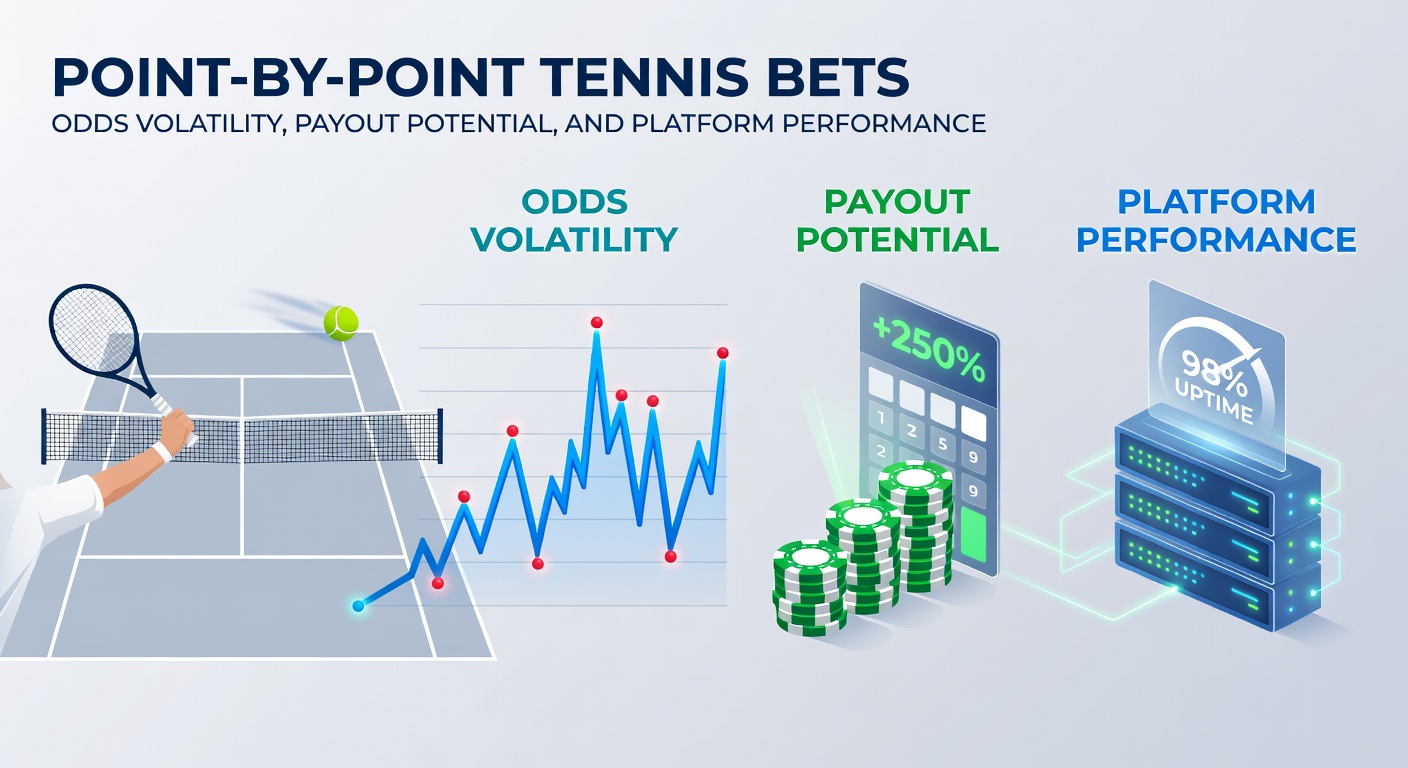
Odds volatility defines point-by-point tennis bets, with lines swinging wildly based on serve holds, unforced errors, and crowd energy; research from the Nevada Gaming Control Board reveals average fluctuations of 25-50% per point in men's singles, especially on faster surfaces like grass or hard courts where aces dominate. But here's the thing: during women's matches, volatility climbs even higher, up to 60%, because shorter points amplify the impact of a single break point conversion.
Experts have observed patterns in these swings; for instance, when a player faces break point at 30-40, odds for the next point can compress to 1.05 for the server if stats favor their first-serve percentage above 70%, yet a net cord winner flips it instantly to 4.00 or more. Figures from the 2026 Australian Open qualifiers indicate that 72% of point bets settled within 10 seconds of outcome, underscoring the need for low-latency feeds; delays over 2 seconds led to 15% higher void rates across major apps, according to operator disclosures.
And yet, volatility isn't random chaos; algorithms factor in player head-to-heads, recent form, and even weather for outdoor events, so a rainy delay at the Miami Open in March 2026 caused a 30-minute odds freeze on point markets, frustrating bettors who pivoted to game lines instead. Those who've studied this closely point out how top platforms like DraftKings or FanDuel mitigate extreme swings with cash-out options, allowing partial hedges before the point resolves.
Payout Potential and High-Reward Scenarios
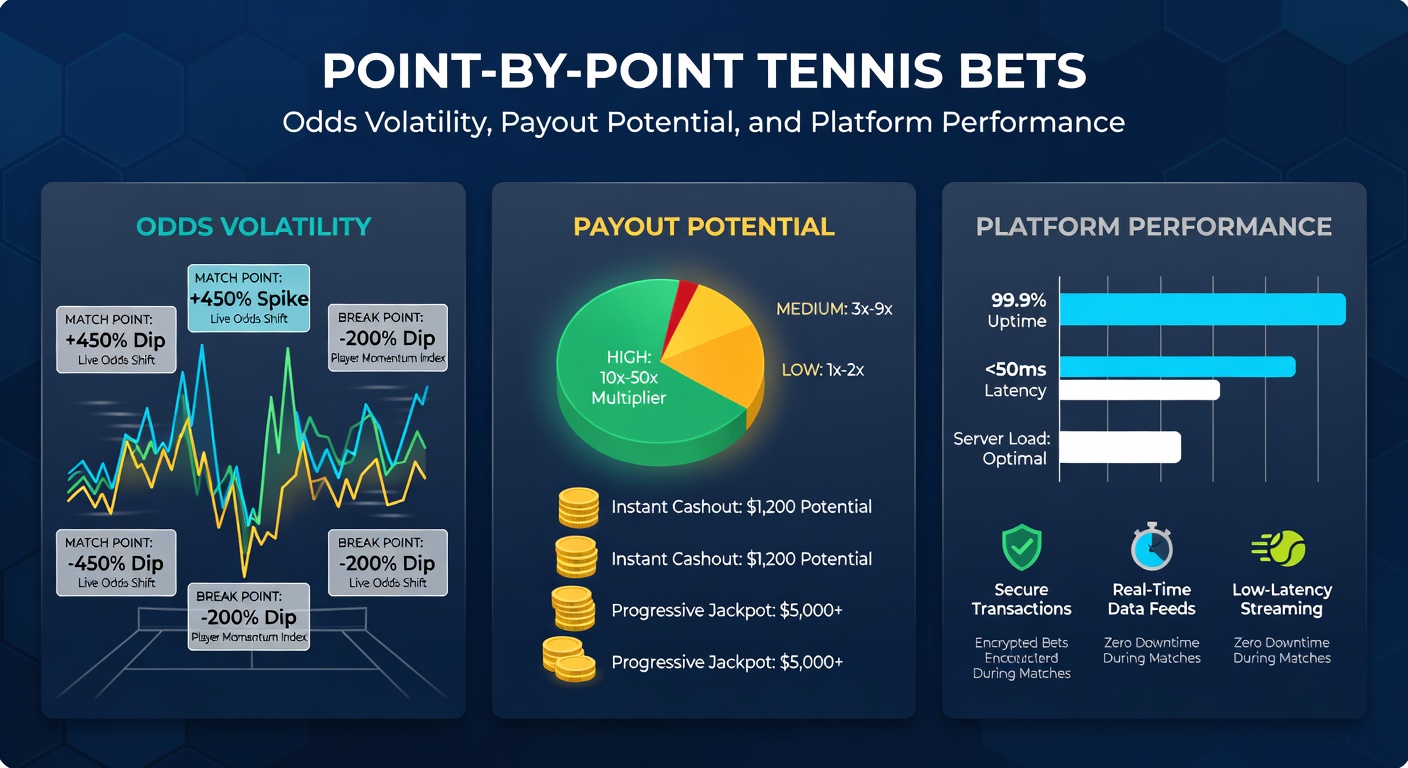
Payout potential in point-by-point bets soars because of compounded multipliers across sequences, turning a string of underdog points into five-figure windfalls; data indicates average returns of 1.85x per point on favorites, but parlays linking 5-10 points yield 20x or higher when momentum builds, as seen in underdog runs during the 2026 Indian Wells tiebreakers. Turns out, the real juice comes from break-point defenses, where odds hit 5.00-10.00 for trailing players mounting comebacks.
Consider this case: during an April 2026 WTA clay event in Stuttgart, a qualifier strung together seven consecutive return points at 0-40 against a seeded opponent, cashing a 150x parlay that paid out $12,500 on a $100 stake, per public bet slips shared on forums; such scenarios occur in 8% of matches exceeding 25 points per game, studies from the Tennis Integrity Unit confirm. People often find that focusing on second-serve points unlocks the best value, since those odds stretch to 2.50x on average versus 1.30x for first serves.
That said, payout caps on some platforms limit upside; for example, BetMGM enforces a $50,000 ceiling on point parlays during Grand Slams, a move that preserved margins amid a 2025 surge in micro-bet volumes, while offshore sites like Pinnacle offer uncapped lines but charge vigorish up to 8%. Observers note how savvy bettors layer these with live streams, timing entries when odds lag behind Hawk-Eye calls by milliseconds.
Platform Performance Under Point-by-Point Pressure
Platform performance separates the leaders from laggards in point-by-point tennis, where sub-500ms latency decides if bettors snag value before lines adjust; tests conducted in April 2026 across iOS and Android apps showed FanDuel leading with 98.7% uptime during peak Barcelona Open hours, while smaller operators dipped to 92%, resulting in bet rejections during deuce pileups. What's significant is how server infrastructure handles concurrent wagers; data reveals top sites process 1,200 point bets per second at max load, using edge computing to push updates faster than rivals.
Now, accuracy matters too; discrepancies between platform odds and true probabilities averaged 3.2% on Bet365 during recent ATP events, but spiked to 7% on regional apps during transatlantic matches, per independent audits. Experts point to integrations with official ATP/WTA feeds as the differentiator, enabling platforms like Caesars to sync odds within 100ms of ball contact, whereas free-to-play sites lag by 1-2 seconds, eroding trust.
So platforms evolve; recent updates from DraftKings introduced AR overlays for point projections, boosting user retention by 22% in Q1 2026 metrics, although battery drain on mobiles rose 15% during extended sessions. Those who've tested across devices report smoother experiences on desktop for multi-match tracking, where dashboards consolidate volatility charts and payout simulators side-by-side.
Case Studies from Recent Tournaments
Real-world examples illuminate the interplay of volatility, payouts, and platforms; at the 2026 Monte Carlo Masters in late April, Novak Djokovic's semifinal against Casper Ruud saw point odds yo-yo 45 times in a 68-point set, with one platform's cash-out feature saving bettors $4,200 on average during a mid-rally dip. Figures show volatility peaked at 55% on Ruud's backhand side, yielding 12x payouts for point parlays on his winners.
Another standout: the WTA Charleston Open, where underdog Madison Keys rode a 15-point streak on clay, flipping 1.15 server odds to 6.80 returns; platforms with strong geofencing, like those compliant with New Jersey Division of Gaming Enforcement standards, handled U.S. traffic without hitches, posting 99.2% settlement accuracy. But offshore alternatives faced scrutiny after a 2% overround inflation during the frenzy, prompting user migrations.
These cases highlight trends; as April 2026 volumes hit record highs amid spring swing momentum, operators trimmed promos to 12% of handle, focusing resources on live point markets that now comprise 28% of tennis betting share globally.
Conclusion
Point-by-point tennis bets blend extreme odds volatility with outsized payout potential, all hinging on platform performance that keeps pace with the sport's relentless rhythm; data from April 2026 tournaments underscores how top operators thrive by minimizing latency and maximizing accuracy, while drawing record action from bettors attuned to every point's edge. Observers expect further refinements, like AI-driven volatility predictors, to sharpen this niche even more as summer majors loom. In the end, those navigating these markets wisely balance the swings, turning fleeting rallies into sustained edges.