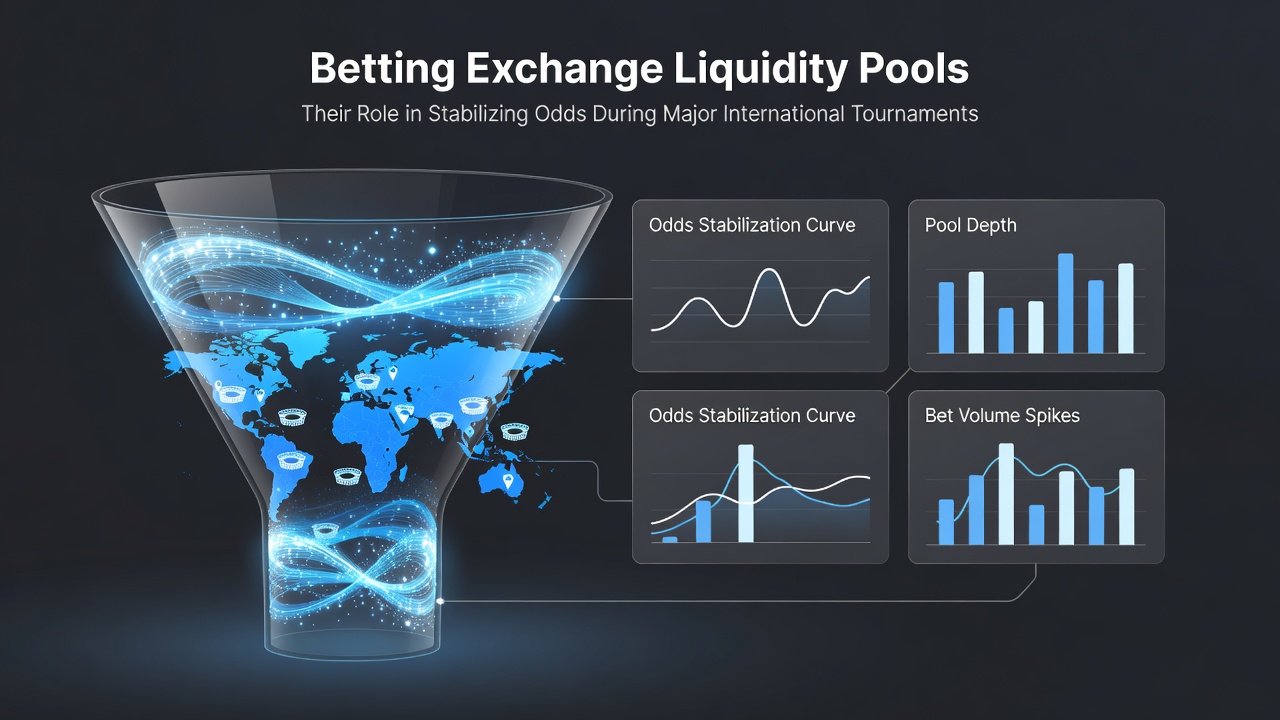
Liquidity Pools in Betting Exchanges and Their Contribution to Odds Stability in Worldwide Tournaments
Betting exchanges operate through liquidity pools that aggregate unmatched bets from participants around the world, and these pools directly influence how odds respond to sudden shifts in wagering volume during major international tournaments. When large events draw concentrated action on specific outcomes, the depth of available liquidity determines whether prices move smoothly or experience sharp spikes that later reverse. Observers note that exchanges with substantial pool sizes tend to absorb incoming orders without requiring drastic price adjustments, whereas thinner pools leave odds more exposed to temporary imbalances.
Mechanics of Liquidity Formation on Exchanges
Liquidity pools form when users place limit orders that sit in the order book until matched by opposing bets, and this structure differs from traditional bookmakers who set fixed prices and take the opposite side of every wager. Data from major exchanges shows that pool depth often increases in the weeks leading up to tournaments because recreational and professional participants add orders at various price points in anticipation of volatility. The result is a self-reinforcing cycle where greater depth attracts additional participants who value the ability to enter and exit positions at predictable costs.
During peak tournament periods, algorithms monitor these pools in real time and adjust order placement to capture spreads while contributing to overall depth. Researchers at academic institutions studying market microstructure have documented that exchanges with higher average liquidity experience smaller price impacts from equivalent bet sizes compared with less active platforms. This pattern holds across soccer World Cup matches, Olympic finals, and other global competitions where public interest spikes simultaneously across multiple time zones.
Role in Maintaining Stable Odds Through High-Volume Periods
Odds stability emerges when liquidity pools contain enough unmatched orders on both sides of a market to absorb large bets without forcing significant movement. In practice this means a sudden surge of money backing one team during a knockout match can be matched against existing lay orders rather than requiring the entire price to shift dramatically. Figures from exchange operators indicate that markets with pool depths exceeding several hundred thousand dollars in matched volume per outcome typically see price changes limited to a few percentage points even when millions flow in over short intervals.
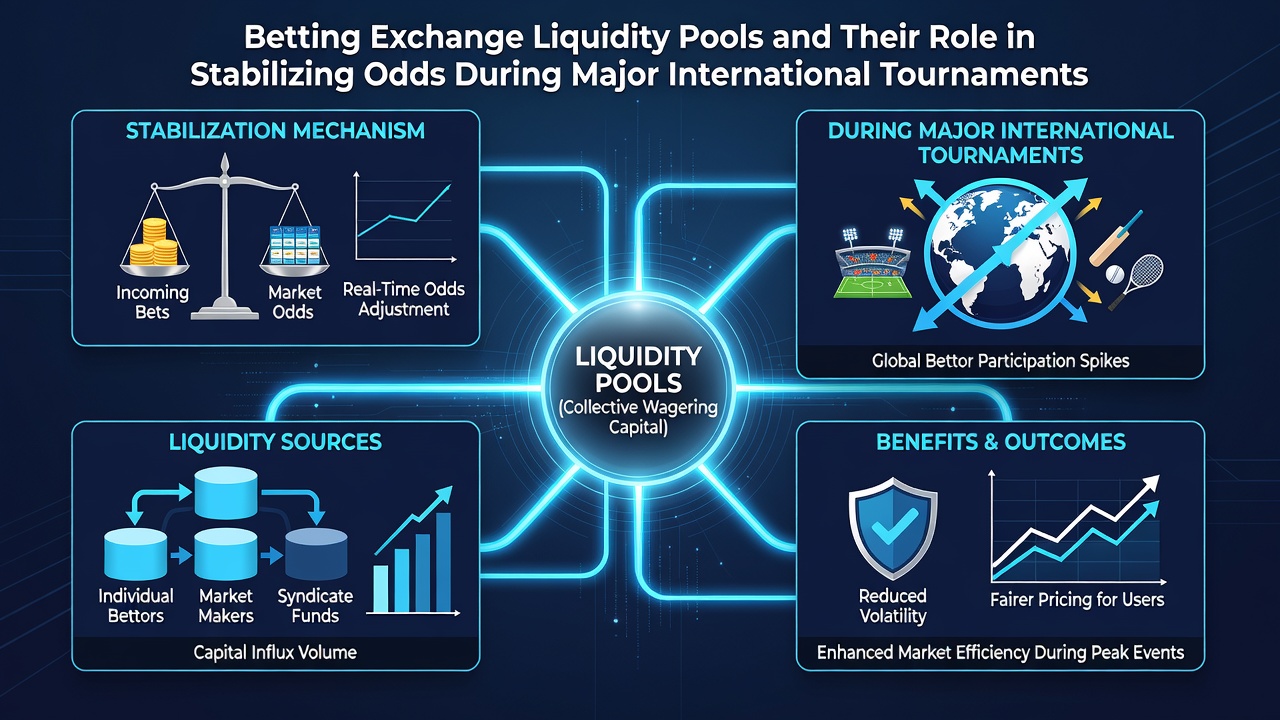
August 2026 saw several major international competitions conclude with relatively contained odds swings on leading exchanges, a development analysts attributed in part to deeper liquidity pools that had accumulated throughout the preceding months. Those monitoring the data observed that lay orders placed weeks earlier at longer prices acted as buffers, preventing runaway movements when late money arrived on favorites. The same pattern appeared in basketball and tennis tournaments where cross-market hedging further supported depth across related selections.
Comparative Behavior Across Different Tournament Stages
Early rounds of international tournaments often feature wider liquidity spreads because participant interest remains distributed across many teams, whereas later knockout stages concentrate volume on fewer matches and therefore deeper pools per market. Studies of historical exchange data reveal that final matches frequently record the highest matched volumes, yet the percentage price impact per unit of new money tends to decrease once pools have matured. This occurs because prior rounds generate residual orders that carry forward and provide baseline depth.
Market participants who place orders at multiple price levels during group stages contribute to the foundation that later supports stability when elimination games generate concentrated flows. Regulatory filings from jurisdictions including those overseen by the Nevada Gaming Control Board and the Australian Transaction Reports and Analysis Centre show consistent increases in exchange handle during these concentrated periods without corresponding spikes in price dislocation metrics.
External Factors Influencing Pool Resilience
Weather disruptions, last-minute roster changes, and geopolitical developments can all trigger sudden order flow into or out of specific selections, testing the capacity of liquidity pools to maintain equilibrium. Exchanges that automatically widen spreads or pause trading during extreme volatility help protect pool integrity, while those that continue matching orders demonstrate greater resilience when underlying depth remains sufficient. Industry reports compiled by organizations such as the European Gaming and Betting Association document how platforms with automated risk controls experienced fewer instances of erratic odds during the 2026 summer tournament window.
Cross-border participation further bolsters pool depth because bettors in different regions operate on staggered schedules, adding orders at times when others are inactive. This geographic diversification reduces the risk that a single market experiences prolonged one-sided pressure.
Conclusion
Liquidity pools on betting exchanges serve as the primary mechanism for absorbing volume surges and supporting odds continuity throughout major international tournaments. Their effectiveness depends on accumulated depth from prior periods, the distribution of orders across price levels, and the presence of automated safeguards that activate during extreme conditions. Data collected across multiple competitions confirms that deeper pools correlate with reduced price impact per unit of new wagering activity, allowing markets to process large flows while preserving relative stability. As tournament calendars continue to expand, the relationship between pool size and odds behavior remains a central factor in exchange market performance.