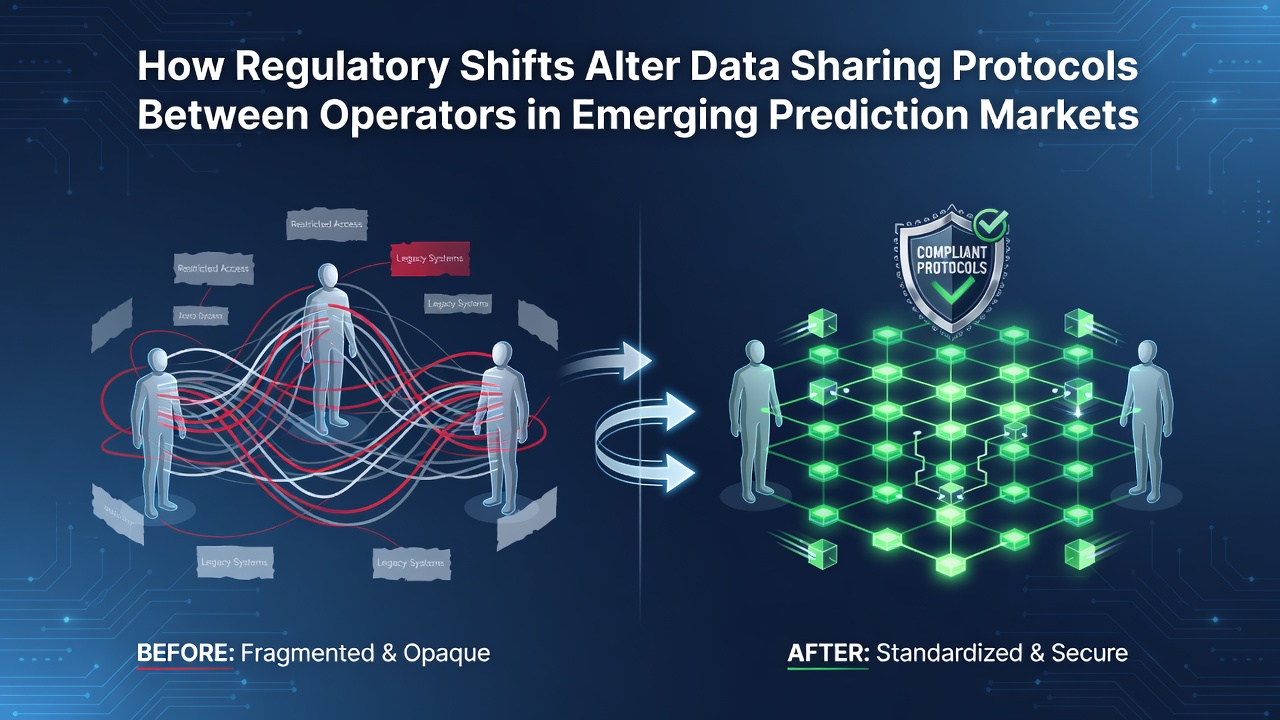
How Regulatory Shifts Alter Data Sharing Protocols Between Operators in Emerging Prediction Markets
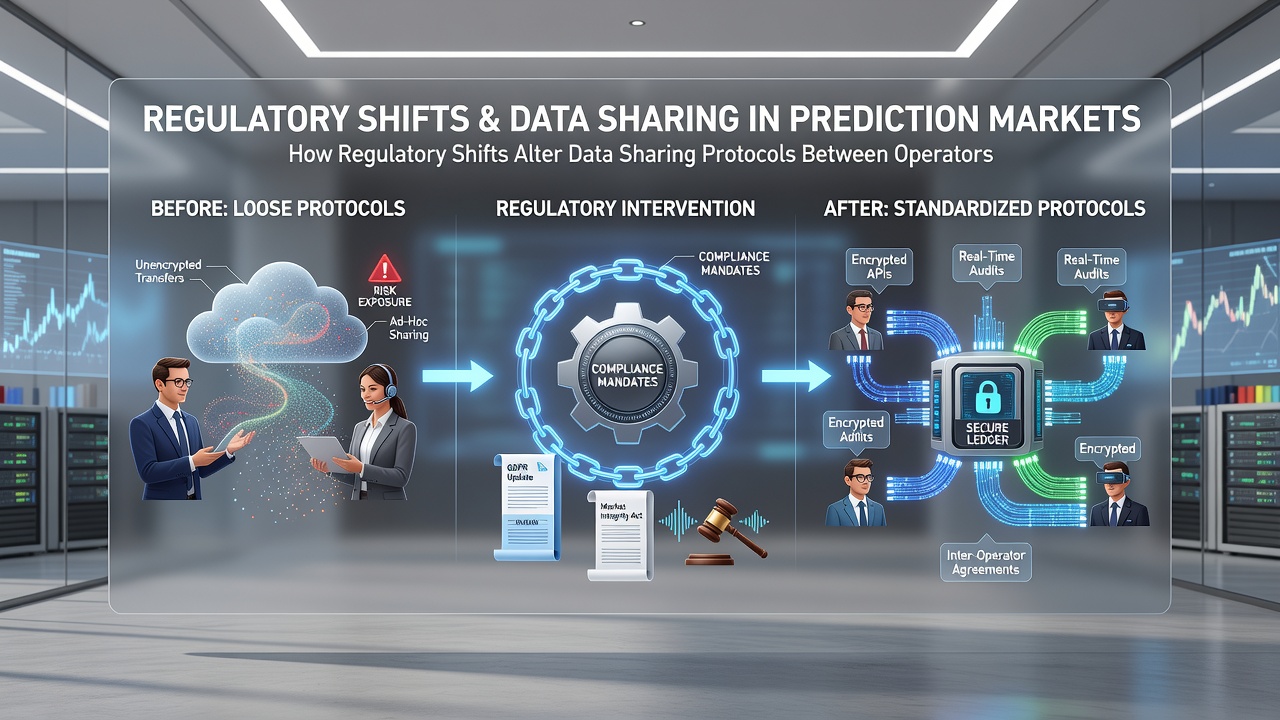
Regulatory frameworks governing prediction markets continue to evolve rapidly, and those changes directly reshape the technical and legal standards operators use when exchanging user and transaction data. Platforms that once operated with minimal coordination now face mandates requiring standardized encryption, audit trails, and consent verification before any cross-operator data transfer occurs.
Key Regulatory Updates Taking Effect in Mid-2026
July 2026 marks the implementation deadline for several overlapping rules issued by the U.S. Commodity Futures Trading Commission and the European Securities and Markets Authority. Both bodies require prediction market operators to adopt machine-readable data schemas when sharing settlement information or user verification records. The new schemas replace earlier ad-hoc file transfers with API endpoints that log every access request in immutable ledgers. Operators must also maintain separate data silos for event outcome data versus personal identifiers, a separation that was optional under previous guidance.
Canadian provincial regulators followed suit with parallel requirements that took effect one month earlier. Those rules emphasize cross-border data portability while still enforcing strict residency controls. The result is a patchwork of protocols that operators must reconcile through modular compliance layers rather than single unified systems.
Technical Adjustments in Data Exchange Infrastructure
Prediction market operators responded by deploying zero-knowledge proof modules that allow verification of user eligibility without exposing full identity profiles during inter-operator queries. These modules satisfy both anti-money laundering checks and emerging privacy statutes. Data sharing now occurs through permissioned blockchain sidechains that timestamp each packet and automatically purge records once the required retention period expires.
Legacy flat-file exchanges have largely disappeared. In their place sit encrypted streaming pipelines that support real-time reconciliation of order books across competing platforms. When two operators need to confirm whether a trader has already taken a position on a correlated event, the pipeline returns only a cryptographic hash rather than raw account details.
Regional Variations in Compliance Approaches
Australian authorities introduced a voluntary code that ties data-sharing privileges to participation in a national sandbox. Operators who join the sandbox receive streamlined approval for joint liquidity pools but must publish quarterly transparency reports detailing every external data request they received. European operators, by contrast, operate under binding technical standards that leave less room for customization yet provide clearer safe harbors when disputes arise.
Researchers at the University of Melbourne documented how these differing regimes affect latency. Their analysis showed that sandbox participants cleared inter-operator queries in 1.8 seconds on average, while fully regulated European entities averaged 3.4 seconds due to additional checksum requirements.
Operational Impacts on Smaller Platforms
Smaller prediction market startups report higher relative costs when upgrading their back-end systems to meet the new protocols. Many have formed consortiums to share the expense of building compliant middleware. One such group, formed in March 2026, now routes all settlement data through a single audited node that each member can query under predefined access rules.
Larger platforms absorbed the transition more easily because they already maintained enterprise-grade logging systems. They simply extended existing pipelines to satisfy the new schema requirements without major architectural overhauls. Industry observers note that this disparity accelerates consolidation trends already visible in the sector.
Conclusion
Regulatory shifts continue to standardize the technical rails that prediction market operators use for data exchange. The combination of encryption mandates, retention limits, and audit requirements has replaced earlier informal arrangements with structured, verifiable protocols. As additional jurisdictions finalize their own rules through the remainder of 2026, operators will likely face further refinements to these systems rather than wholesale redesigns.