How Injury Timing Disclosures Reshape Pre-Match Line Adjustments Across Team Competitions
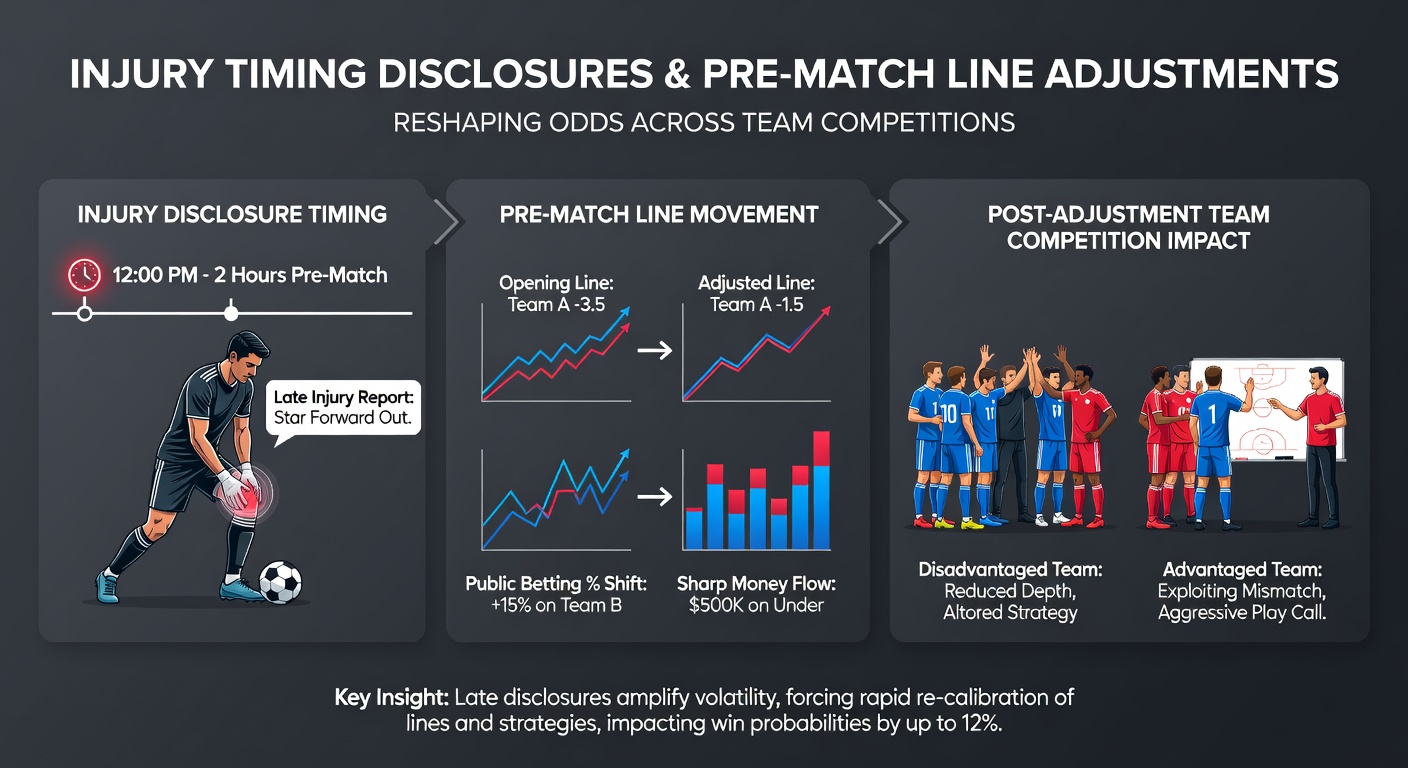
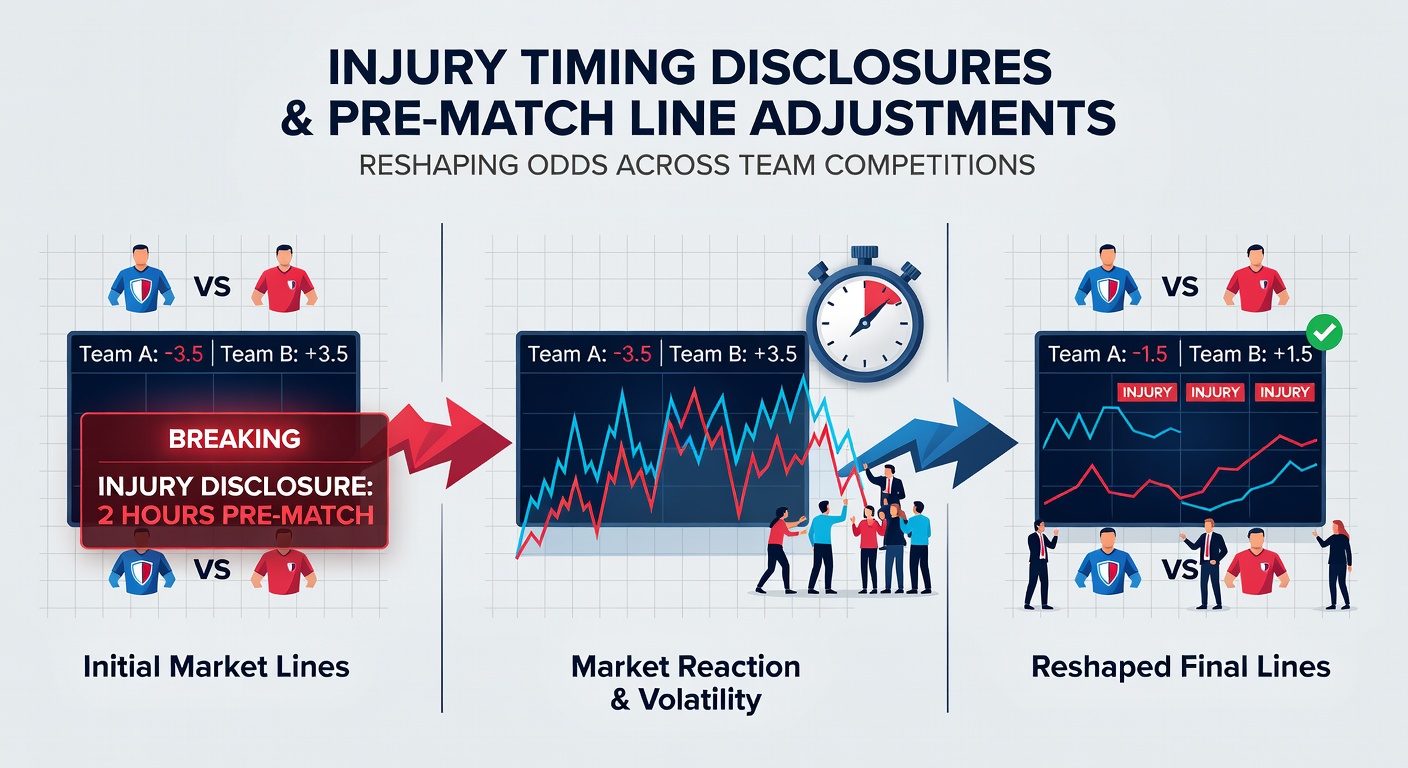
Timing plays a decisive role when injury disclosures reach betting markets ahead of team competitions, and the sequence of those announcements often triggers immediate recalibrations in pre-match lines. Sportsbooks and oddsmakers monitor official reports from leagues such as the NBA, Premier League, and NFL because each new detail about player availability alters projected outcomes. When disclosures arrive hours rather than days before tip-off or kickoff, spreads and totals shift to reflect updated probabilities, and sharp bettors respond by placing wagers that further accelerate the movement.
Disclosure Windows and Market Mechanics
Leagues publish injury reports on fixed schedules that vary by sport and region, yet last-minute updates still occur during practices or medical evaluations on game day. Observers note that a quarterback ruled questionable on a Thursday can become probable by Friday afternoon, prompting sportsbooks to tighten or widen point spreads within minutes. Data from major operators shows that line adjustments following late disclosures average between 1.5 and 3 points in football and 4 to 6 points in basketball, with totals moving in tandem when key offensive or defensive contributors are affected. These changes reflect collective market intelligence rather than isolated decisions, as multiple books align prices to balance action.
Regional Variations in Reporting Standards
European soccer federations maintain different disclosure protocols than North American leagues, and those differences influence how quickly lines stabilize. UEFA competitions require clubs to submit squad lists 24 hours before matches, while domestic leagues allow more flexibility until an hour before kickoff. In contrast, the NBA mandates injury reports by 5 p.m. local time the day before games, although teams frequently issue supplemental updates. Analysts tracking these patterns across continents report that markets tied to UEFA events experience steadier pre-match lines because of the earlier cutoff, whereas NBA totals fluctuate more when multiple players receive late evaluations.
Impact on Spreads, Totals, and Player Props
Individual player props react most visibly to timing shifts because a single star's absence changes expected scoring outputs directly. When a starting forward in the NBA is listed as doubtful minutes before tip-off, books adjust his points, rebounds, and assists lines downward while simultaneously raising opponent totals. Team spreads move in parallel, and correlated props across teammates receive secondary adjustments. Research conducted by sports analytics groups indicates that prop lines change an average of 2.8 times between initial release and game start when injury news emerges after the first report window closes, compared with 0.9 changes when all information arrives on schedule.
Technology and Real-Time Monitoring
Automated monitoring systems now scan league feeds, team social channels, and press conferences for emerging injury details, allowing operators to refresh odds continuously. In June 2026 several platforms introduced enhanced alert protocols that flag any deviation from previously published availability lists. These tools reduce latency between disclosure and line movement, yet they also heighten sensitivity to incomplete information because partial reports can trigger premature shifts. Market makers at larger books therefore maintain manual review layers that cross-check multiple sources before finalizing adjustments, ensuring that rapid changes rest on verified data rather than speculation.
Case Examples from Recent Competitions
During the 2026 NBA playoffs, a late scratch of a starting center in Game 3 of a first-round series caused the total to drop 7.5 points within 40 minutes while the spread moved 3 points toward the opposing team. Similar patterns appeared in European soccer when a star striker was ruled out 90 minutes before a Champions League fixture, prompting both the over/under and the draw line to adjust sharply. Observers tracking these events note that sharp money tends to enter first on the side favored by the new information, followed by recreational action that widens the movement until books reach their target liability limits.
Regulatory Oversight and Transparency Measures
Authorities in multiple jurisdictions have examined whether accelerated line changes following injury disclosures require additional safeguards. The Australian Competition and Consumer Commission reviewed disclosure timing practices in 2025 and recommended standardized reporting windows across domestic leagues to limit volatility. Canadian provincial regulators adopted similar guidelines that require operators to document the timing of each adjustment and the source material that prompted it. These measures aim to maintain market integrity without restricting the flow of legitimate information that influences fair odds.
Conclusion
Injury timing disclosures continue to drive measurable recalibrations in pre-match lines across team competitions, and the precision of those adjustments depends on reporting schedules, verification speed, and operator protocols. Data compiled from recent seasons demonstrates consistent patterns where later announcements produce larger and more frequent movements in spreads, totals, and props. As leagues refine their communication standards and technology platforms improve monitoring capabilities, the interval between disclosure and line stabilization shortens, yet the underlying relationship between player availability and market pricing remains unchanged.