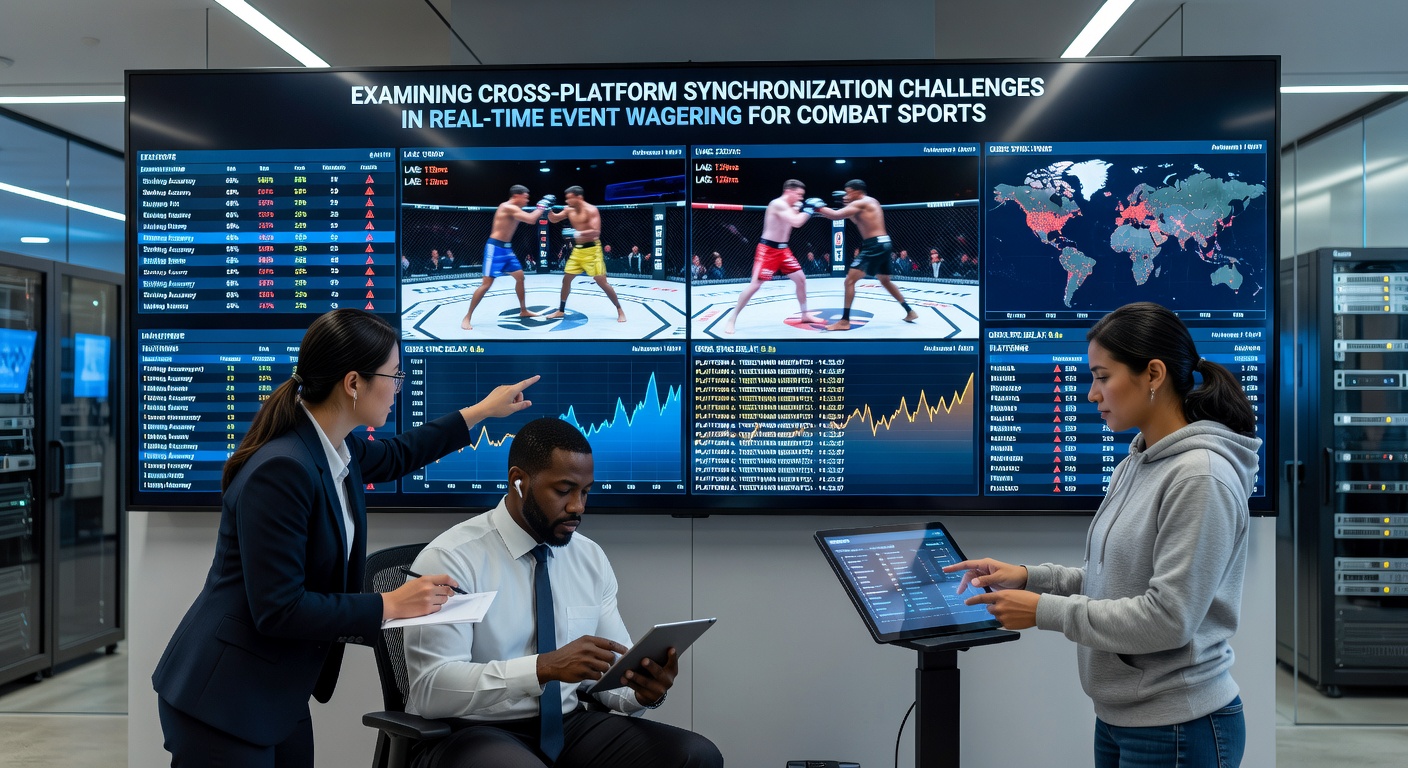
Examining Cross-Platform Synchronization Challenges in Real-Time Event Wagering for Combat Sports
Real-time event wagering has expanded rapidly across combat sports platforms since early 2025, and operators now face persistent synchronization issues when users switch between mobile apps, desktop sites, and integrated smart TV services. Data from major fight promotions in May 2026 shows that live betting volumes for UFC and boxing cards increased by double digits compared with the prior year, yet many platforms still struggle to maintain consistent odds and bet statuses across devices.
Core Technical Barriers in Live Data Feeds
Combat sports events generate high-frequency data streams from ringside sensors, official scorecards, and broadcast graphics, and these streams must reach every connected user within fractions of a second. When one platform receives an updated strike count or knockdown flag later than another, users encounter mismatched odds and rejected wagers. Researchers at several engineering institutions have documented latency variances of up to 800 milliseconds between iOS and Android instances during peak rounds, while desktop browsers sometimes lag an additional 300 milliseconds behind native applications.
Operators address these gaps through distributed cache layers and edge servers positioned near major internet exchange points, yet complete parity remains elusive because each operating system handles network interrupts differently. One technical team working with a North American sportsbook reported that Android devices using older kernel versions introduced periodic buffering delays that desktop sessions avoided entirely.
Impact on User Sessions Across Devices
Participants who begin a wager on a smartphone and later open the same event on a laptop often discover that pending bets appear settled on one screen while remaining active on the other. This discrepancy arises because session tokens and bet ledgers do not always propagate through shared backend clusters at identical speeds. Industry reports compiled by the European Sports Betting Association note that cross-device reconciliation failures accounted for roughly 4 percent of all disputed transactions during the first quarter of 2026.
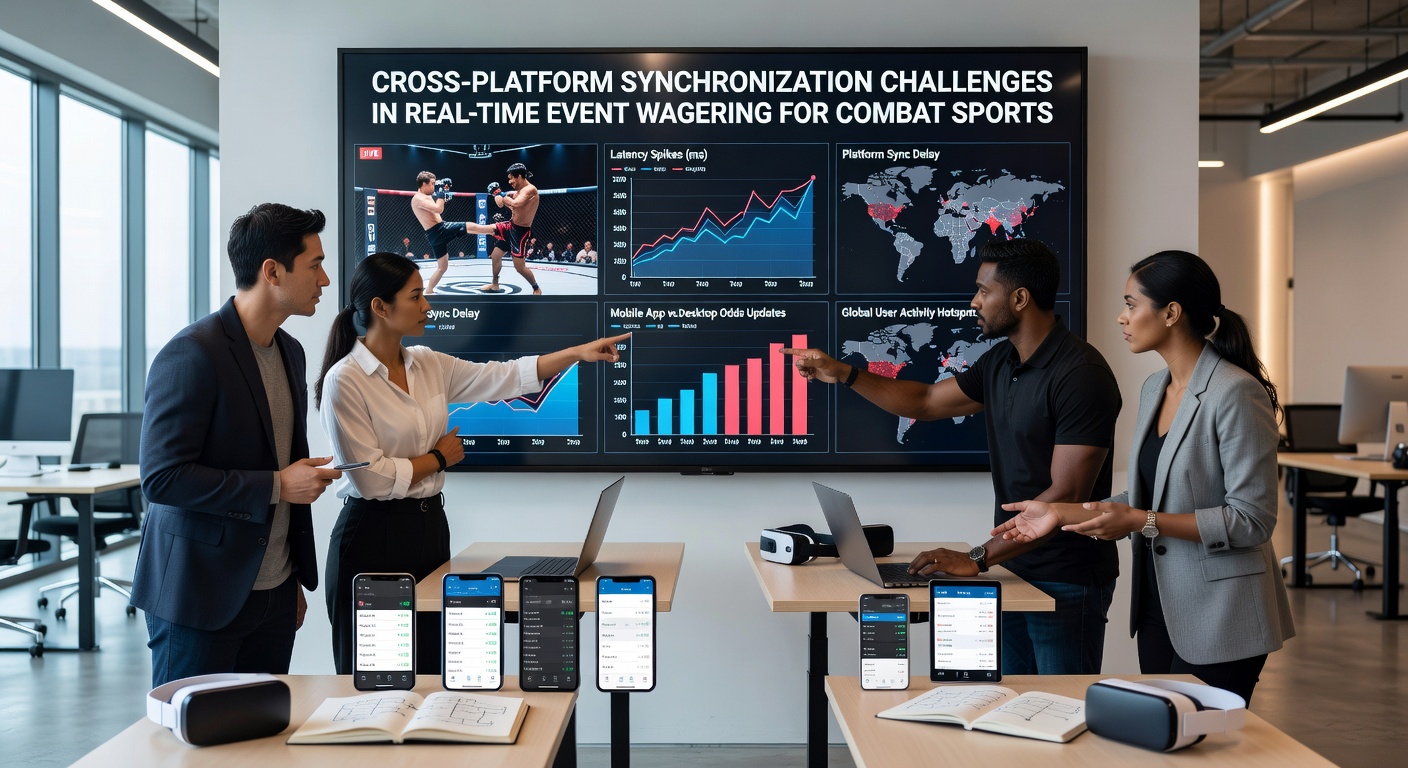
Users attempting to cash out mid-round face particular friction when the cash-out button disappears on one platform while remaining visible on another. Observers at several Canadian gaming laboratories tracked these mismatches during a high-profile May 2026 boxing event and found that nearly one in twelve attempted cash-outs required manual intervention from support staff to resolve.
Regulatory and Infrastructure Responses
State gaming commissions in the United States and provincial regulators in Canada now require operators to demonstrate sub-second data parity across all supported platforms before approving new live-betting features. Compliance audits examine timestamp logs from multiple device classes and compare them against the official event feed maintained by the promotion. A recent review conducted under the direction of the New Jersey Division of Gaming Enforcement highlighted that three major platforms needed architecture revisions after failing to meet the 250-millisecond threshold on tablet connections.
Meanwhile, the Australian Communications and Media Authority has begun publishing quarterly metrics on cross-platform dispute rates, encouraging operators to adopt unified websocket protocols rather than proprietary push systems. These guidelines emphasize that synchronization standards must account for both 5G and legacy 4G network conditions common in regional markets.
Emerging Solutions and Industry Standards
Software vendors have introduced specialized middleware that tags every incoming data packet with a universal sequence number and device-agnostic timestamp. When a mobile client and a desktop client request the same round update, the middleware serves the packet with the highest sequence value to both, reducing divergence. Early adopters among European operators report a 60 percent drop in reconciliation tickets after deploying such systems ahead of the 2026 summer fight schedule.
Additional progress stems from collaborative working groups that include hardware manufacturers and sportsbook engineers. These groups test standardized heartbeat intervals and fallback mechanisms that activate whenever a device detects a gap longer than 150 milliseconds. Although adoption remains uneven, the approach has gained traction because it addresses root causes rather than patching symptoms after users notice inconsistencies.
Conclusion
Cross-platform synchronization challenges in real-time combat sports wagering continue to shape both technical roadmaps and regulatory expectations through 2026. Data from multiple jurisdictions demonstrates that latency variances and session mismatches remain measurable obstacles, yet incremental improvements in middleware, auditing protocols, and device-specific testing are narrowing teh gaps. As fight calendars advance and live betting volumes rise, the effectiveness of these coordinated efforts will determine how seamlessly users can move between platforms without encountering conflicting information.