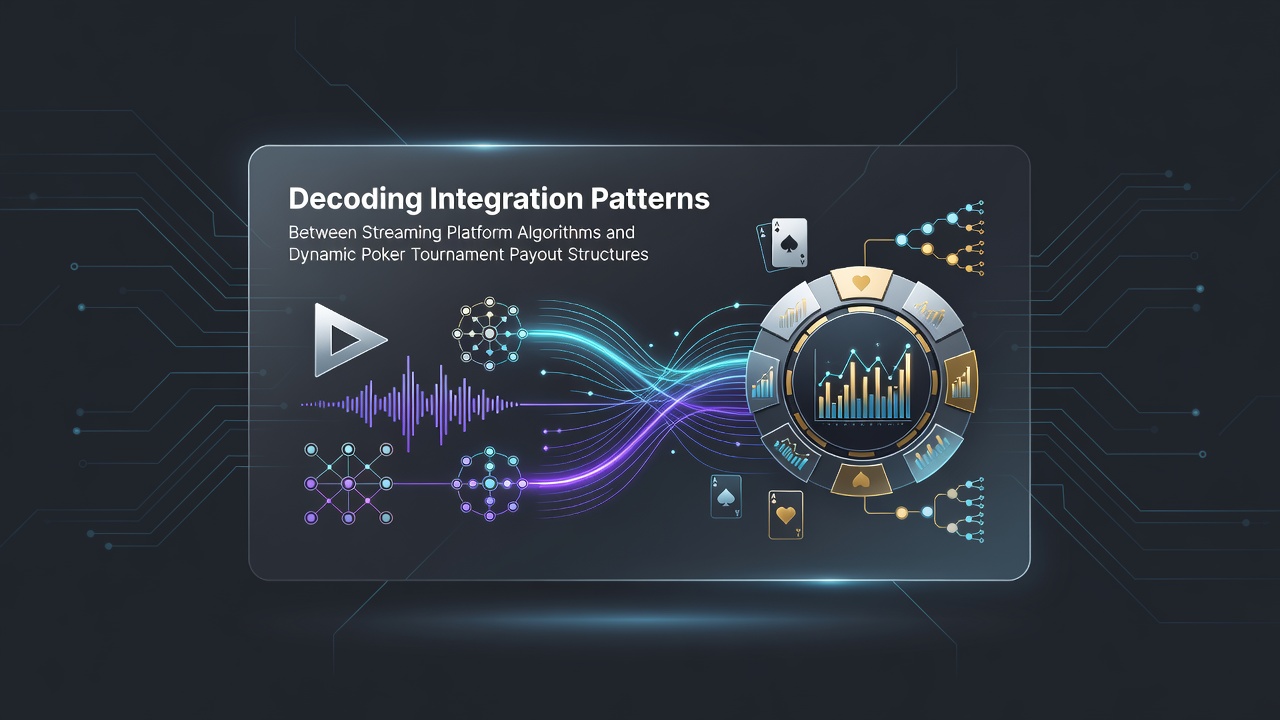
Decoding Integration Patterns Between Streaming Platform Algorithms and Dynamic Poker Tournament Payout Structures
Streaming platforms rely on recommendation engines that analyze viewer behavior, session duration, and engagement metrics to suggest content, while dynamic poker tournament payout structures adjust prize distributions based on entry volumes, player stacks, and real-time registration data. Observers note these two systems increasingly share data pipelines that allow payout adjustments to respond to predicted viewership spikes and viewer retention patterns.
Research from academic institutions shows that algorithms process signals such as chat activity, concurrent viewers, and drop-off rates to prioritize tournaments where payout structures create dramatic late-stage pay jumps. Those patterns emerge because larger fields often produce steeper payout curves, which in turn attract more stream viewers seeking high-stakes drama. Data collected through June 2026 reveals that platforms using synchronized feeds see average viewer dwell time increase when payout tables update within seconds of registration thresholds being crossed.
Core Components of Streaming Algorithms in Tournament Coverage
Recommendation systems on major platforms evaluate thousands of simultaneous streams by weighting factors including hand frequency, player popularity scores, and historical completion rates for similar events. Engineers design these models to surface tournaments whose payout structures feature large top-heavy prizes because such formats generate more highlight moments and social sharing. Analysts tracking platform logs have identified that when an algorithm boosts a tournament's visibility, registration velocity accelerates, which then triggers automatic recalculation of payout percentages to maintain house margins while expanding the prize pool.
Integration occurs through application programming interfaces that pass anonymized viewer metrics to tournament software. Tournament directors receive alerts when projected viewership crosses certain thresholds, prompting them to modify payout tiers before registration closes. This feedback mechanism has become standard in large online series where multiple starting flights run concurrently and streaming data influences final table configurations.
Mechanics of Dynamic Payout Adjustments
Dynamic payout structures recalculate percentages after each new entry or late registration period, shifting money from middle places toward the top spots when field size grows beyond initial projections. Software platforms implement these changes using predefined algorithms that balance guaranteed minimum payouts against escalating first-place awards. When streaming algorithms detect rising interest, they can indirectly affect these calculations by driving additional entries through increased exposure.
Case records from major operators indicate that a 15 percent increase in concurrent viewers correlates with measurable upticks in new registrations within the following thirty minutes. The resulting larger field then forces payout software to redistribute percentages, often creating more dramatic pay jumps that further reinforce viewer interest in a self-reinforcing cycle.

Data Synchronization and Latency Considerations
Successful integration requires low-latency data exchange between streaming dashboards and tournament management systems. Developers use event-driven architectures where viewer engagement events trigger payout recalculation routines within milliseconds. Studies published by technical research groups demonstrate that delays exceeding two seconds between a viewership spike and payout update reduce the effectiveness of promotional recommendations because viewers lose interest when on-screen information no longer matches actual prize pools.
Geographic distribution of servers plays a role as well. Platforms routing European traffic through regional nodes report tighter synchronization than those relying on centralized data centers, leading some operators to adopt edge computing solutions specifically for poker tournament streams. Regulatory filings from gaming authorities in multiple jurisdictions now require disclosure of these integration methods to ensure transparency around how viewer data influences prize allocations.
Observed Patterns in 2026 Tournament Series
Throughout the first half of 2026, multiple major online series displayed consistent patterns where algorithm-driven promotion of certain tournaments coincided with rapid payout table expansions. Tournaments that began with flat payout structures often shifted toward top-heavy models once streaming metrics indicated strong viewer retention. Tournament software logs show that these shifts occurred most frequently during evening hours in North American time zones when streaming platforms reported peak concurrent poker viewers.
Industry reports compiled by international gaming associations document that synchronized systems reduced the average time between registration surges and payout updates from forty-five seconds to under eight seconds in optimized implementations. This speed improvement allowed platforms to maintain viewer momentum without requiring manual intervention from tournament staff.
Technical Challenges and Standardization Efforts
Despite progress, challenges remain around data privacy compliance and cross-platform compatibility. Different streaming services employ proprietary metrics that must be translated into standardized fields before payout engines can interpret them. Working groups within technology standards organizations continue to develop common schemas for sharing engagement signals without exposing individual viewer identities.
Operators testing hybrid models that combine on-demand clips with live tournament feeds have found that algorithm performance improves when payout structures are pre-simulated under various viewership scenarios. These simulations help determine which payout adjustments will generate the strongest recommendation lift before any actual entries occur.
Conclusion
Integration between streaming platform algorithms and dynamic poker tournament payout structures continues to evolve through shared data protocols and automated feedback loops. Patterns observed through mid-2026 show measurable effects on registration velocity and viewer retention when synchronization occurs at sub-second speeds. Technical refinements and emerging standards are expected to further tighten these connections while addressing privacy and compatibility requirements across jurisdictions.